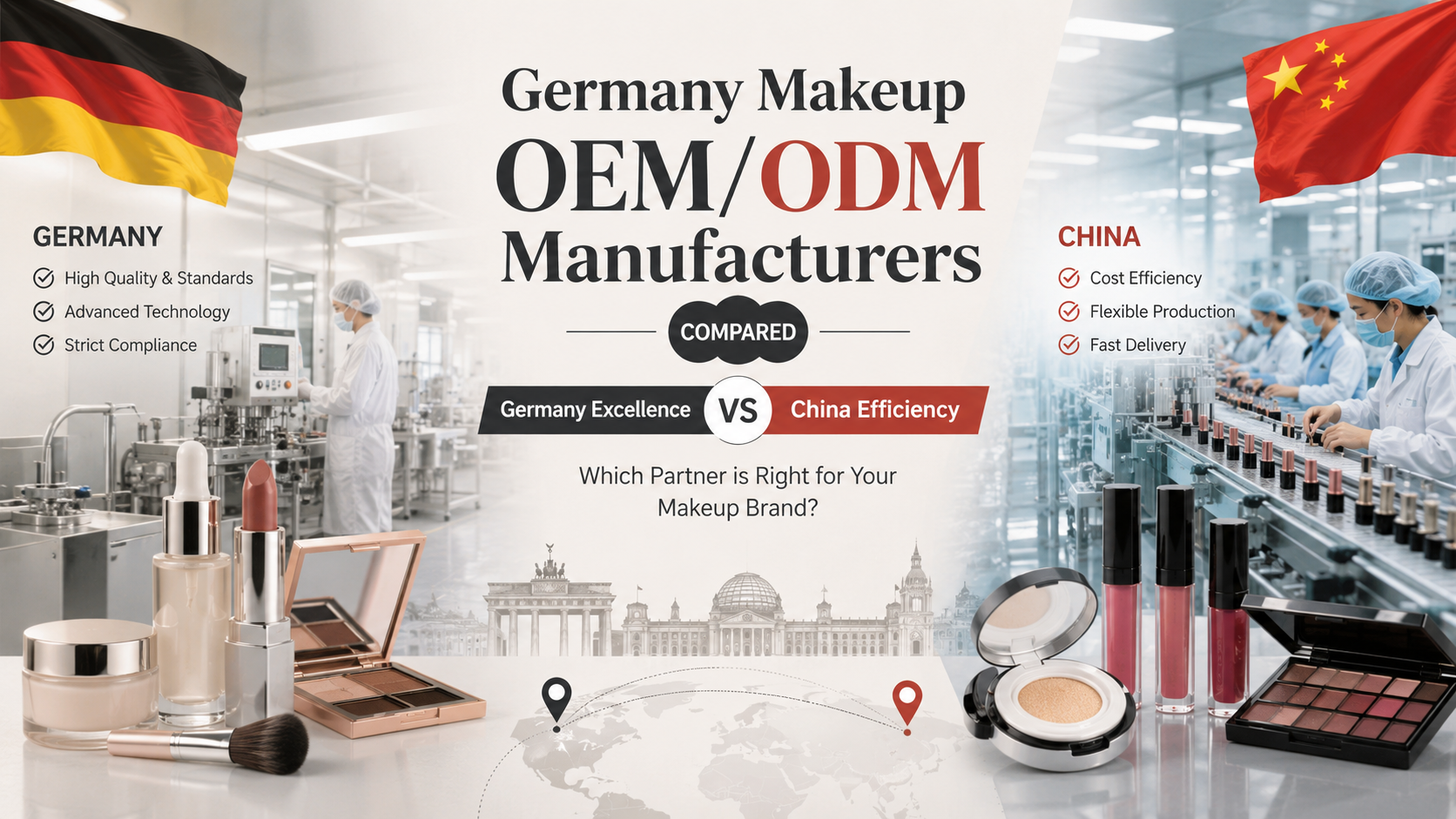
The broader context is strong. Cosmetics Europe has described Europe as a major cosmetics and personal care market, with Germany, France, Italy, the UK, Spain, and Poland among important national markets (Source: ). Italy's beauty sector is regularly tied to contract manufacturing, fashion-led brands, and export credibility. Dolce & Gabbana Beauty, for example, moved beauty operations closer to its own organization in 2022-2023 and industry reporting has connected its beauty growth with Italian manufacturing partners such as Intercos, Cosmint, and ICR (Source: ).
For global context, L'Oreal reported 2025 full-year sales of about EUR44 billion and Europe grew 6.6%, showing that Europe remains commercially active even when China and travel retail are mixed (Source: ). The global beauty industry reached about $548 billion in 2024, which keeps pressure on brands to launch better products with cleaner operations, not just prettier mood boards (Source: ).
This article covers only color cosmetics OEM/ODM. I am not ranking skincare, fragrance, haircare, supplements, devices, body care, or consumer makeup brands.
Shortlist: Italian makeup manufacturer routes
| Rank | Supplier route | Best for | Typical strength | Buyer caveat |
|---|---|---|---|---|
| 1 | Large Italian contract manufacturer | Established brands needing scale and prestige credibility | R&D, global brand service, EU process control | Higher entry expectations and less startup flexibility |
| 2 | Specialist color cosmetics lab | Indie and prestige brands needing texture or category focus | Lip, face, eye, powder, or hybrid specialization | MOQ and capacity vary by lab |
| 3 | Packaging-led Italian route | Brands where component design drives shelf value | Design language, primary packaging, premium feel | Formula may be outsourced |
| 4 | Italy plus China dual sourcing | Brands balancing prestige SKUs and flexible core SKUs | Smart margin and launch sequencing | Needs clear supplier role split |
| 5 | China OEM/ODM with Italian market positioning | Startups and distributors needing lower MOQ and broader shade tests | Cost, component range, multi-SKU flexibility | Not a Made in Italy route |
Methodology for this ranking
I ranked by buyer fit, not fame. In our sampling work, the scoring criteria that matter are color cosmetics depth, R&D strength, shade development, packaging support, MOQ flexibility, EU compliance readiness, export history, and cost control.
Italy scores high for prestige and technical credibility. China scores high for flexible SKU building and packaging access. The right answer depends on brand stage: a funded prestige brand and a distributor testing 12 lip shades should not use the same sourcing model.
Italy's supplier base: what buyers are really buying
Italy has several well-known color cosmetics and contract manufacturing names. Intercos is widely known as a global cosmetics contract manufacturer with makeup capability and a long history in third-party production (Source: ). Chromavis is another Italian color cosmetics specialist associated with makeup development and production (Source: ). Gotha Cosmetics focuses on makeup development and production for beauty brands (Source: ). Ancorotti Cosmetics is known for contract manufacturing in makeup, with particular public attention around mascara and other categories (Source: ).
Those suppliers are not interchangeable. Some are better for large prestige projects, some for category specialization, and some for formula innovation. If a buyer only asks, "Who is the best Italian manufacturer?" I usually ask back: best for what MOQ, which channel, which texture, which claims, and which margin?
Rank 1: large Italian contract manufacturer
A large Italian contract manufacturer is best for established brands, retailers, and funded founders who need strong R&D systems, process documentation, and premium credibility. This route can support advanced color cosmetics development: lipstick payoff, base makeup skin feel, pressed powder performance, mascara wear, and prestige packaging coordination.
The challenge is access. Large manufacturers often prefer serious volumes, clear briefs, and buyers who understand development timelines. If your budget only supports a tiny test run, you may spend months discussing a project that a smaller or overseas OEM could execute faster.
Rank 2: specialist color cosmetics lab
Italy's specialist labs are often excellent when the product brief is specific. A lip texture, long-wear face product, baked powder, liquid blush, or mascara can benefit from a focused lab that knows the category deeply.
This route is useful when the formula is the hero SKU. If your brand will be judged on a single signature lipstick finish or a soft-focus blush texture, paying more for focused expertise may make sense. The buyer should still confirm ownership terms, sample fees, stability process, lead time, and MOQ.
Rank 3: packaging-led Italian route
Italian packaging and design sensibility can lift perceived value. For prestige channels, the pack sometimes sells the first unit before the formula earns the second sale. This route suits brands that need component selection, decoration, cartons, and retail presentation aligned with European taste.
The risk is confusing packaging strength with full OEM/ODM strength. A beautiful compact does not solve shade development, formula stability, or batch consistency. Packaging can justify price, but formula earns reorder.
Rank 4: Italy plus China dual sourcing
This is the route I like for brands with enough discipline to manage two systems. Use Italy for one or two prestige hero SKUs, then use a China OEM/ODM partner for flexible lip, blush, foundation, or brow extensions.
The dual route can reduce cost pressure while preserving a premium story where it matters. The buyer must avoid mixing claims. Do not call a China-made SKU "Made in Italy." Keep origin, formula ownership, and compliance records clean.
Rank 5: China OEM/ODM with Italian market positioning
This route ranks fifth inside an Italy article, but I would rank it first for many startups. If the buyer's goal is not a Made in Italy claim, China OEM/ODM can be more practical for broad color cosmetics assortment, lower test MOQ, and faster packaging exploration.
At ZM Beauty, we support color cosmetics such as , , , , and custom development through our support. ZM's site also presents , 8+ years of experience, 100+ cases, EU and MENA certification messaging, packaging support, and a staged development process.
Italy versus ZM Beauty: practical comparison
| Factor | Italian OEM/ODM route | ZM Beauty route |
|---|---|---|
| Brand story | Strong for Made in Italy or European prestige | Strong for flexible OEM/ODM and export-ready private label |
| MOQ | Often higher, especially for serious custom work | Stock makeup 200-1000 pcs; custom formula 600-1000 pcs; full custom 6000-12000 pcs |
| Product depth | Excellent for advanced makeup and prestige briefs | Strong for lip, face, base, brow makeup and broad packaging options |
| Cost | Higher labor and development costs | More accessible for multi-SKU testing |
| Compliance | EU process knowledge is a core advantage | ZM can provide required materials for clients to handle color cosmetics registration |
| Lead time | Strong but depends on lab capacity | Structured sampling and production workflow, useful for phased launches |
EU compliance and buyer responsibility
For EU sales, Regulation (EC) No 1223/2009 is the core cosmetics law, covering safety, responsible person duties, labeling, product information files, and market access requirements (Source: ). This matters whether you manufacture in Italy, China, Korea, or anywhere else.
For color cosmetics, we can assist by providing required materials so clients can handle CPSR and registration with the right responsible person or compliance partner. I do not claim ZM broadly provides completed CPSR for all makeup products. That would be inaccurate. Requirements depend on destination market and should be confirmed during product development.
MOQ and launch planning for Italy buyers
An Italian route can be excellent when volume and price positioning support it. But if your first order needs 5 lip gloss shades, 3 blush shades, and 2 foundation shades, ask whether the supplier's MOQ forces you into too much inventory.
With ZM Beauty, stock color cosmetics can usually start at 200-1000 pieces, custom formula at 600-1000 pieces, and full custom development at 6000-12000 pieces. Liquid foundation custom formula MOQ is 1000 pieces. Final MOQ must be confirmed by the account manager based on product and packaging.
My usual advice is to match MOQ to evidence: use lower-MOQ stock or semi-custom products for market proof, then invest in full custom once sell-through tells you which texture and shade family deserves it.
Why buyers choose Italy
Buyers choose Italy for prestige association, advanced makeup manufacturing, European process discipline, packaging taste, and access to suppliers who understand luxury beauty briefs. A founder selling into department stores or premium retailers may find Italy persuasive.
Italy also helps when a brand's identity is tied to European fashion, editorial color, or premium sensorial quality. In that case, a higher MOQ can be part of the business model rather than a problem.
Sourcing risks in Italy
The first risk is budget mismatch. Some buyers admire Italy but need startup-level MOQs. The second risk is slow decision-making if the brief is vague. Italian labs can be highly capable, but they cannot turn unclear brand mood into a precise formula without time and cost.
The third risk is origin confusion. If you combine Italy and China sourcing, label claims must be clean. The fourth risk is overbuilding too early. A full custom prestige product can be beautiful, but dead stock is still dead stock.
ZM Beauty does not manufacture eyeshadow palettes, perfume, body care, shampoo, devices, children's products, brushes, or sponges. This article does not cover skincare projects, even though ZM Beauty can support selected skincare as part of its wider business.
Sourcing questions to ask Italian makeup suppliers
-
What is your minimum order by formula and by shade? A total MOQ can hide shade-level commitments. Ask for the real number per SKU.
-
Which products do you manufacture in-house? Confirm whether lipstick, foundation, blush, mascara, packaging, and filling are internal or subcontracted.
-
What EU compliance documents are included? Ask about formula documentation, GMP statement, stability tests, compatibility tests, and support for the responsible person.
-
How do you manage shade tolerance? Color cosmetics need target standards and batch control. Ask how the factory handles approved masters and reorder matching.
-
Who owns the formula and packaging files? If you are building brand value, you need clear terms for future reorders, exclusivity, and formula changes.
FAQ
Is Italy better than China for makeup manufacturing?
Italy can be better for prestige positioning, advanced development, and Made in Italy goals. China can be better for flexible MOQ, broad component access, and multi-SKU testing. The best choice depends on the buyer's channel and budget.
Which Italian makeup suppliers should buyers research first?
Buyers often research Intercos, Chromavis, Gotha Cosmetics, Ancorotti Cosmetics, Cosmint, and other specialist labs. Each should be evaluated by product type, MOQ, documentation, capacity, and willingness to serve the buyer's stage.
Can ZM Beauty serve European brands?
Yes. ZM Beauty's website presents EU and MENA certification messaging, custom formulas, packaging, product compliance support, and a UK branch. EU buyers still need proper responsible person and registration handling for their market.
What MOQ does ZM Beauty offer for color cosmetics?
Stock lip, face, and brow makeup usually starts at 200-1000 pieces. Custom formula is usually 600-1000 pieces. Fully custom development is usually 6000-12000 pieces.
Should a startup choose Italy for a first launch?
Only if the brand story, pricing, and funding support it. Many startups should first test demand with a flexible OEM/ODM route, then upgrade selected hero products later.
Who should not inquire with ZM Beauty for this topic?
Buyers seeking perfume, body care, shampoo, devices, makeup tools, children's products, or eyeshadow palettes are outside this color cosmetics scope. Buyers who need a legally Made in Italy product should use an Italian production route.