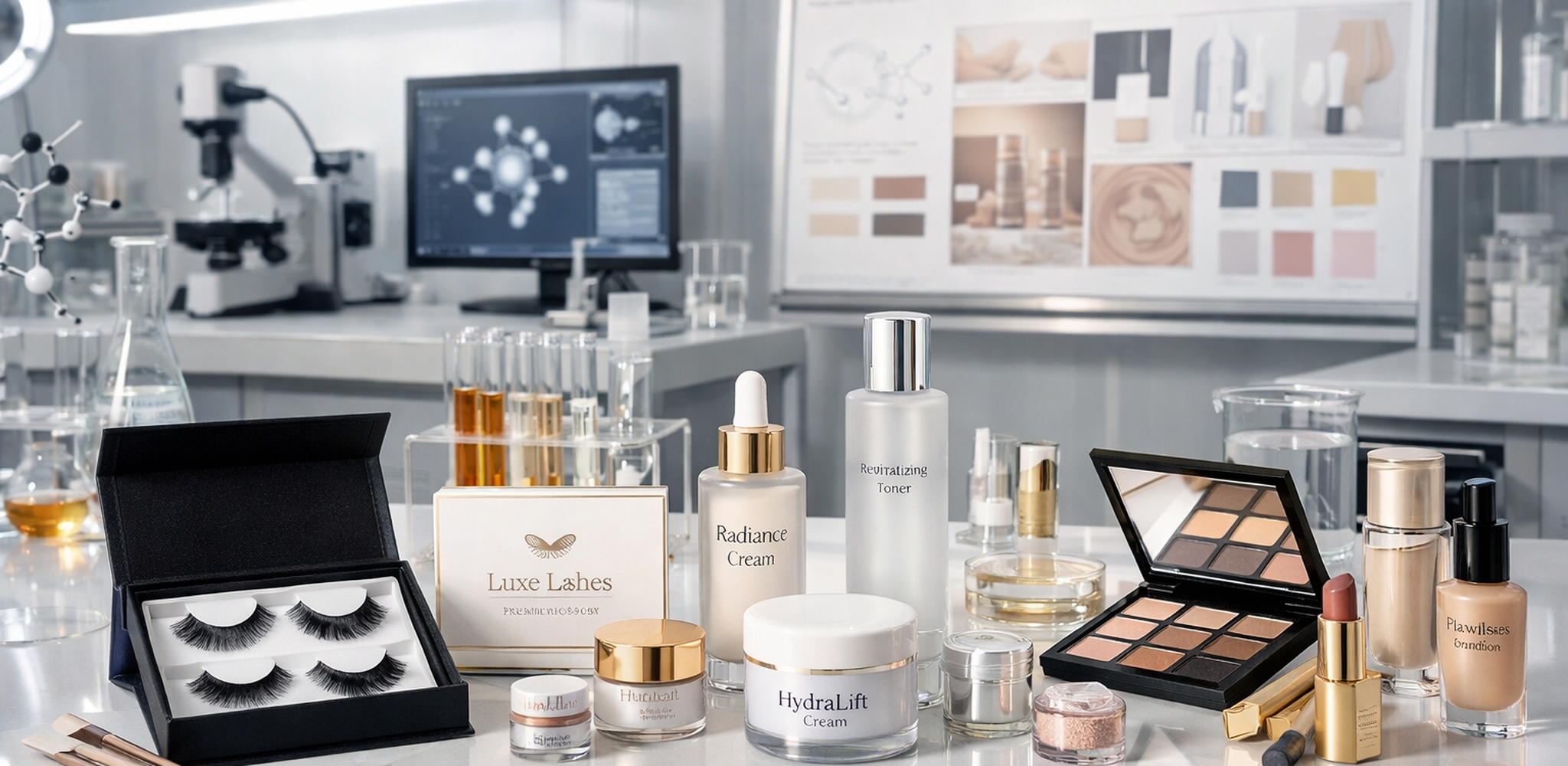
In the hyper-competitive landscape of the 2026 beauty industry, brand owners are no longer just fighting for shelf space; they are fighting for agility, ethical transparency, and scientific relevance. The traditional model of treating a manufacturer as a mere "order-taker" is rapidly becoming obsolete. Today, the difference between a brand that plateaus and one that dominates lies in the depth and quality of its cosmetic manufacturing partner.
Established beauty brands and rapidly scaling DTC (Direct-to-Consumer) players face a common set of hurdles: the demand for "cleaner" formulas, the pressure for faster iteration cycles, and the logistical nightmare of managing fragmented supply chains. When your manufacturer fails to keep pace with these shifts, your brand loses its competitive edge, its market share, and its relevance in the eyes of the modern consumer.
The Evolution of the Beauty Market: Navigating 2026 Trends
As we move through 2026, several key trends have shifted from "nice-to-have" to absolute business requirements. Brands that fail to integrate these into their product development strategy risk being sidelined by more agile competitors who understand the nuances of the modern beauty consumer.
The Rise of Microbiome-Friendly and Regenerative Skincare
Clean beauty has evolved far beyond the simple "free-from" lists of the past decade. The 2026 consumer demands clean beauty formulation that actively supports the skin’s natural microbiome and leverages regenerative biotechnology. This scientific shift means that formulas must be both gentle and high-performance.
This requirement places a heavy burden on R&D departments. It requires a manufacturer with advanced laboratory capabilities who can source ethical, high-performance bio-actives while maintaining strict vegan and cruelty-free standards. Brands now need to prove the efficacy of their products through clinical-grade testing, a service that only a top-tier private label cosmetics manufacturer can provide as part of a strategic partnership.
Fast Iteration and the "Micro-Drop" Strategy
The traditional 12-to-18-month product development cycle is dead. In an era where social media trends can ignite and fade within weeks, successful brands are now utilizing a "micro-drop" strategy. This involves launching small, curated batches of innovative products, gathering real-time consumer data, and then rapidly scaling the "winners" while pivoting away from the "losers."
This approach requires a level of manufacturing flexibility that was unheard of a few years ago. It demands a beauty product supplier that offers low MOQ cosmetics and rapid sampling cycles. By minimizing the financial risk associated with massive inventory commitments, brands can afford to be more experimental, more creative, and ultimately, more successful.
The Demand for Circularity and Ethical Transparency
Sustainability in 2026 is no longer just about recyclable plastic. It is about the entire lifecycle of the product—from ethical ingredient sourcing to carbon-neutral manufacturing processes. Consumers are increasingly using AI-driven apps to scan ingredients and trace supply chains back to the factory floor. A brand’s reputation is now inextricably linked to the ethical standards of its OEM cosmetic factory.
The "Supplier Gap": Why Most Manufacturers Fall Short
Most brands encounter a significant bottleneck when they attempt to scale: the "Supplier Gap." This occurs when a factory has the physical capacity to produce at scale but lacks the strategic insight, communication skills, or R&D agility to help a brand innovate. Common pain points include:
- Rigid MOQ Requirements: Large-scale factories often refuse to touch projects that don't meet massive volume thresholds. This stifles a brand's ability to test new categories or launch niche custom beauty products.
- Lack of Full-Service Integration: Brands are often forced to act as their own project managers, coordinating between separate vendors for formulas, primary packaging, secondary boxes, and regulatory compliance. This leads to communication breakdowns, increased costs, and delayed launches.
- Slow R&D Cycles: In a market where trends change in weeks, waiting three or four months for a single formula iteration is a recipe for failure. A slow manufacturer is a weight around the neck of a fast-growing brand.
- Poor Quality Control: As production scales, maintaining consistency becomes harder. Manufacturers that lack rigorous, multi-stage QC processes often deliver batches that vary in color, texture, or efficacy, leading to costly returns and damaged brand trust.
A Strategic Framework for Scaling Your Beauty Brand
To overcome these challenges, established brands are shifting toward an "All-In-One" partnership model. This framework ensures that every step of the product lifecycle—from the first lab sample to the final quality control check—is synchronized and optimized for speed and quality.
Phase 1: Support & Rapid Sampling
Innovation begins in the lab, not on the production line. A strategic partner provides expert guidance during the initial conceptual phase, helping you translate a vague brand vision into a chemically stable and commercially viable formula. Whether it is a high-performance growth oil / serum or a complex waterproof makeup line, the ability to produce fast, accurate samples is the foundation of a successful launch.
Phase 2: Integrated Packaging and Branding
In the beauty world, the "unboxing experience" is a vital part of the product’s value proposition. Successful brands integrate custom beauty packaging design early in the development process. This ensures that the physical container—whether it’s a glass dropper bottle or a sustainable bamboo tube—not only protects the formula but also perfectly reflects the brand’s luxury, clinical, or minimalist aesthetic.
Phase 3: Global Compliance and Market Readiness
As regulations tighten in markets like the EU, North America, and China, ensuring that your private label makeup supplier understands international compliance standards is non-negotiable. This includes everything from INCI list accuracy and safety data sheets (SDS) to ensuring that "clean beauty" claims are backed by verifiable data.
Phase 4: Quality-Centric Manufacturing and Filling
The actual production phase must be a marriage of precision and speed. Using automated filling lines and climate-controlled environments, a strategic partner ensures that the 10,000th unit is identical to the first. This phase also includes rigorous stability testing to ensure the product remains effective throughout its shelf life.
Case Study: Scaling a Clean Beauty Growth Serum Line
Consider the journey of "Lumina Beauty," a mid-sized e-commerce brand that identified a significant gap in the market for a "Vegan, Microbiome-Friendly Eyelash Growth Serum."
Initially, Lumina approached several large-scale manufacturers but were met with 10,000-unit minimums and a 6-month lead time for R&D. This would have required a massive capital outlay before even knowing if the product would resonate with their audience.
By switching to a strategic partner like ZM Beauty, Lumina was able to:
- Test the Market: They started with a flexible MOQ of 1,000 units, allowing them to validate consumer demand without over-leveraging their capital.
- Iterate with Speed: ZM Beauty’s R&D team produced three formula variations in just three weeks, allowing Lumina to select the one with the best "skin feel" and fastest results.
- Achieve Full Customization: They designed a unique, matte-finish glass bottle with custom branding that stood out in a sea of generic plastic tubes on social media.
- Scale Seamlessly: After the first 1,000 units sold out in record time, ZM Beauty’s high-capacity lines allowed Lumina to scale to a 50,000-unit order for their holiday launch, maintaining perfect quality throughout.
The result? Lumina Beauty increased its annual revenue by 40% and established itself as a leader in the high-growth "clean lash" category.
ZM Beauty: Your Strategic Growth Partner
At ZM Beauty, we don't just operate a production facility; we act as a dedicated extension of your brand’s product development and operations team. Our capabilities are specifically engineered to solve the complex pain points of modern, established beauty businesses:
- Cross-Category Expertise: We offer a one-stop solution for brand expansion. Whether you are moving from lashes into skincare or from makeup into specialized growth serums, our diverse expertise ensures a cohesive brand experience across all product lines.
- Flexible MOQ & Massive Scalability: We believe in growing with our partners. We support you from small-batch market testing to large-scale global distribution, ensuring you never have to switch manufacturers as you scale.
- Advanced R&D for 2026 Standards: Our R&D team is at the forefront of clean beauty formulation. We specialize in vegan, cruelty-free, and microbiome-friendly chemistry, ensuring your brand stays ahead of both consumer demand and regulatory changes.
- Full Customization (Formula + Packaging + Branding): We don't do "cookie-cutter" products. Every formula is bespoke, and every piece of packaging is tailored to your brand’s unique identity.
- Rigid Quality Control: Our 7-step manufacturing process includes multiple QC checkpoints, ensuring that every product leaving our facility is market-ready and flawless.
Final Strategic Insights for Brand Owners
To thrive and dominate in the 2026 beauty market, brand owners and product managers must internalize these three core pillars of strategic growth:
- Prioritize Agility over Raw Volume: In a fast-moving market, the ability to pivot is more valuable than the ability to produce a million units of the wrong product. Choose a partner that facilitates this agility through flexible MOQs and fast R&D.
- Embed Science and Ethics in the Formula: The 2026 consumer is highly educated. "Marketing fluff" no longer works. Ensure your manufacturer can deliver true, science-backed vegan and clean formulations that actually deliver results.
- Seek a Strategic Partner, Not Just a Vendor: A vendor sells you a product; a partner helps you build a business. Look for a manufacturer that offers proactive insights into packaging trends, compliance shifts, and emerging ingredient technologies.
By aligning your brand with a cosmetic manufacturing partner that understands the technological and ethical demands of the 2026 market, you transform your supply chain from a logistical challenge into your greatest competitive advantage.