The global color cosmetics market reached USD 100.2 billion in 2025 and is estimated at USD 105.2 billion in 2026, so mascara is not sitting inside a sleepy category (Source: Grand View Research, 2026). What has changed is the type of lash product that buyers ask for: softer shades, tubing textures, conditioning claims, lash-serum hybrids, and packaging that can survive short-form video scrutiny.
I work with ZM Beauty, so I look at mascara products less as one tube of black pigment and more as a sourcing decision. The brands that move carefully now are not chasing every lash trend. They are deciding which formula mechanism, brush profile, shade story, and claim language can hold up in retail, social commerce, and repeat purchase.
The market data behind mascara demand
Color cosmetics are projected to grow from USD 105.2 billion in 2026 to USD 148.7 billion by 2033 at a 5.1% CAGR (Source: Grand View Research, 2026). Asia Pacific held 33.8% of global color cosmetics revenue in 2025, which matters because many eye-makeup trends start or scale quickly across Asian beauty channels before spreading into Western indie brands (Source: Grand View Research, 2026).
The same report shows mass and economy color cosmetics held 55.1% of the market in 2025, while conventional color cosmetics held 67.0% (Source: Grand View Research, 2026). For mascara sourcing, that tells me two things. First, accessible price points still matter. Second, buyers should not ignore standard, reliable performance just because social media keeps asking for novelty.
Mascara has also become more fragmented. Brown mascara interest surged 162.3% on Google Search and nearly 120% on TikTok year over year, according to Spate data cited by Allure (Source: Allure citing Spate Data, 2025). Glamour reported that web searches for brown mascara nearly doubled in 2024, while TikTok views rose by more than 240% and averaged 5 million weekly views (Source: Glamour citing Spate, 2024). At the same time, Harper's Bazaar reported that U.S. sales of lash accessories and treatments declined 12.9% year over year, and black mascara popularity dropped close to 10% (Source: Harper's Bazaar citing Spate, 2026).
That mixed data is useful. It does not say mascara is dead. It says old, heavy, one-effect mascara is losing space to lighter, softer, more targeted lash products.
What makes a mascara product work
A strong mascara brief starts with film formation. The formula needs enough polymer structure to coat lashes evenly, hold curl, resist smudging, and release cleanly at removal. Too little structure gives weak definition. Too much creates flakes, stiffness, and clumps.
Then comes wax balance. Waxes help build volume and grip, but they can make a formula heavy if the system is not tuned for the brush. A slim comb brush needs a different viscosity than an oversized volume brush. I usually tell buyers to evaluate formula and brush together, not as two separate decisions.
Pigment strategy is changing too. Black is still the commercial base shade, but brown, espresso, burgundy, clear, and hybrid tint formulas now give brands a more precise way to target skin tone, age group, and makeup style. Vogue reported that customers had been asking Ilia for a brown mascara for years, with nearly 1,000 direct requests in about the past year before its launch (Source: Vogue, 2025).
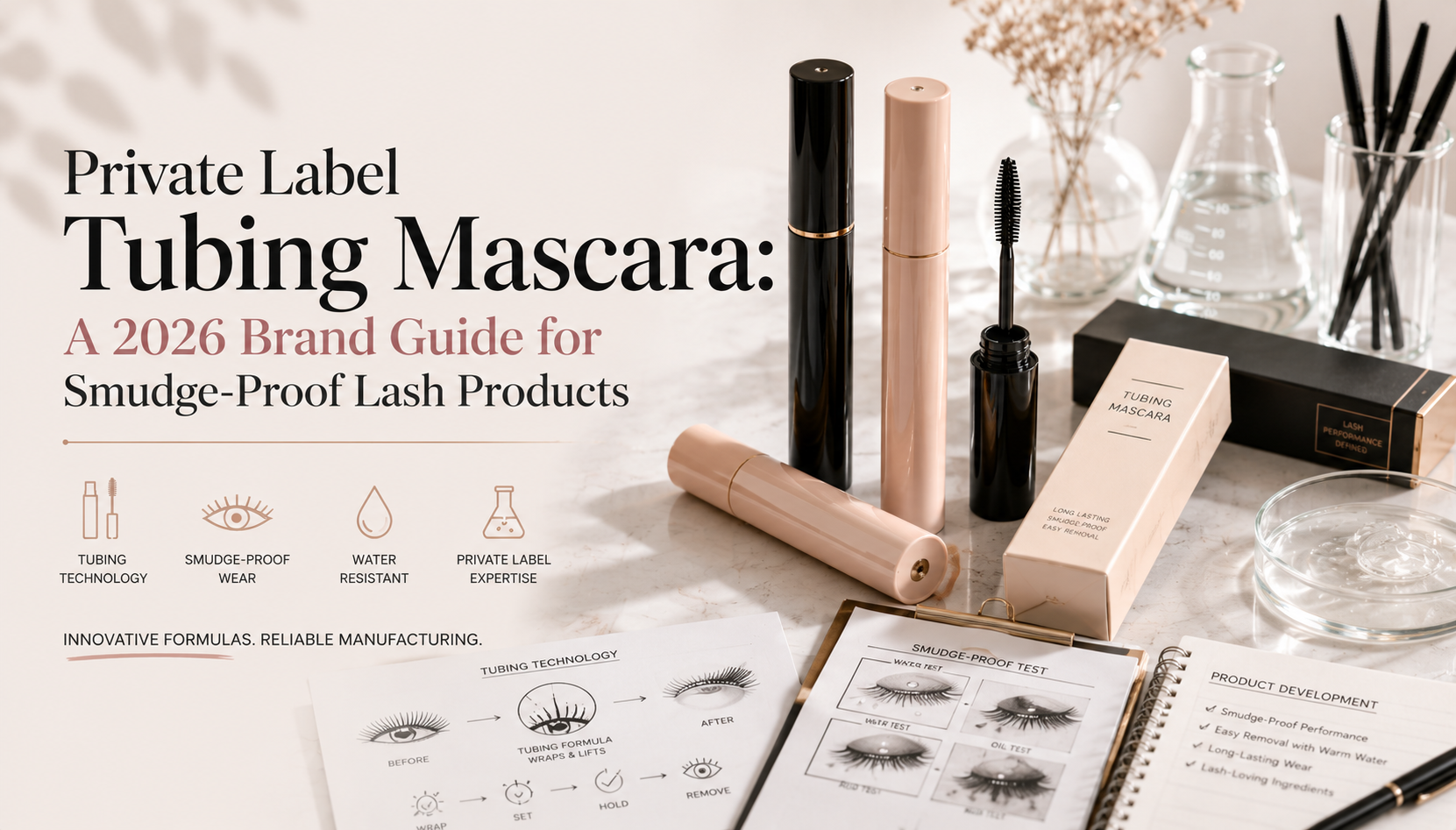
There is also a claim-language issue. Lash growth serum, lash conditioner, mascara serum, tubing mascara, waterproof mascara, and clean mascara are not interchangeable. If a product is a cosmetic, I want the claim system to stay in cosmetic territory: conditioning, defining, volumizing, lengthening appearance, flexible hold, easy removal, and healthier-looking lashes. Medical growth claims need regulatory review in the target market.
Four trend drivers shaping mascara products
The first trend is softer lash definition. Brown mascara, burgundy mascara, clear mascara, and no-mascara looks are all part of the same consumer move. Good Housekeeping called burgundy mascara an early 2026 trend, tied to softer natural glam (Source: Good Housekeeping, 2026). For brands, this means shade extensions can be a lower-risk way to refresh an existing mascara line.
The second trend is hybrid lash care. Vogue's 2024 lash serum guide highlighted peptides, vitamin B5, clover flower extract, mung bean extract, hyaluronic acid, amino acids, and biotin as common lash-support ingredients in popular formulas (Source: Vogue, 2024). This does not mean every mascara should become a serum, but it does mean buyers are asking what the product does after the first swipe.
The third trend is routine speed. Grand View Research notes that daily-use, quick-application color cosmetics are supporting shorter replacement cycles across makeup categories (Source: Grand View Research, 2026). Mascara fits this behavior well because it is a single-step product that can change the whole eye area in under a minute.
The fourth trend is lash alternatives. The Guardian reported that the global eyelash extension market was valued at USD 1.66 billion in 2023 and was expected to double by 2032, while the UK had an estimated 129,000 lash treatments each week (Source: The Guardian, 2024). Mascara brands are competing not only with other mascaras, but with lifts, extensions, tints, serums, and bare-lash aesthetics.
How I would source mascara-adjacent products with ZM Beauty
I work with ZM Beauty, Guangzhou Zemei Cosmetics Co., Ltd., founded in 2017 in Guangzhou. Our confirmed manufacturing scope is color cosmetics across lip, eye, face, and brow, with OEM/ODM service, an in-house laboratory, experienced chemists, and K-beauty inspired formulation work. We export to 30+ countries and communicate in Chinese, English, French, Russian, and Arabic.
For mascara-related sourcing, I would start with ZM Beauty's public mascara category, which currently lists 4 in-stock products and includes mascara growth serum kits and a private label mascara growth serum. The collection listing for private label OEM ODM Mascara Growth Serum shows plant-based, peptide-based, and sensitive-skin style options. The wider growth serum category lists 44 products, including plant-based, peptide-based, and sensitive-skin lash growth serum options.
When a buyer wants a full eye-makeup story, I would also look at our eye makeup category, new arrivals, and private label service pages. These links help a buyer map the product line around the mascara brief instead of thinking about one SKU alone.
Our standard MOQ is 200 pcs per SKU, and typical lead time is 25 to 35 days, with custom formulation timelines varying by brief. We hold GMP, FDA registered, ISO 22716, and Halal certifications. I would not position us as a fit for buyers who need 200 units for an influencer test, traditional bullet lipsticks, powder-based products such as pressed powder or loose powder, or skincare products such as serums, creams, and cleansers. If a buyer needs a conventional colored mascara tube with a specific pigment system, we should confirm feasibility against the current eye-product catalog before quoting.
Five sourcing questions to ask before ordering mascara products
- What exact lash effect should the formula deliver? Length, volume, curl hold, separation, tint, and conditioning do not all come from the same formulation choices. I would ask the supplier to match formula viscosity, wax level, and brush shape to one primary effect before adding secondary claims.
- Which claim words are allowed in the target market? "Growth" can be sensitive because some markets treat true growth claims differently from cosmetic conditioning claims. I would ask for compliant wording such as healthier-looking, conditioned, fuller-looking, or breakage support when the product is cosmetic.
- How will the product perform after eight hours? Fresh application photos are not enough. We need wear testing for flaking, smudging, transfer under the eye, curl drop, and removal feel, especially if the brand wants waterproof or tubing positioning.
- Can the supplier customize the applicator and packaging together? Mascara performance is tightly linked to brush geometry, wiper size, bottle neck, fill volume, and carton protection. A good supplier should discuss these parts together, not sell packaging as decoration only.
- What is the real MOQ for each shade or formula variant? A brown, black, and burgundy range may mean three SKUs, not one. I would confirm MOQ, unit price, testing cost, sample timing, and packaging cost per SKU before building the launch plan.
Risks and downsides buyers should not ignore
The first risk is eye-area sensitivity. Lash products sit close to the mucous membrane, so fragrance, essential oils, preservatives, pigments, and prostaglandin-like ingredients need careful review. Glamour's lash-serum safety guide notes that Latisse is the only FDA-approved eyelash growth serum, while over-the-counter cosmetic serums should avoid making true growth claims (Source: Glamour, 2022).
The second risk is trend whiplash. Brown mascara can be up while black mascara is down, then burgundy can rise, then ghost lashes can change the conversation again. I prefer launching a stable base formula with shade and brush options rather than rebuilding the entire product each season.
The third risk is removal. Waterproof formulas can create loyalty for humid climates and wedding makeup, but poor removal can cause lash breakage complaints. Tubing and washable systems may be easier for daily use, but they need careful claims so customers understand the finish.
The fourth risk is overpromising. A lash serum may support the appearance of healthier lashes, but if the copy implies drug-like growth, the brand inherits regulatory and customer-service risk.
Why mascara is still worth building
- Mascara has fast visual payoff. A consumer can see lift, separation, and color change immediately, which makes the product friendly for video demos and before-after content.
- The category supports shade innovation without changing the whole formula platform. Brown, espresso, clear, and burgundy can help a brand speak to softer makeup trends while keeping operations manageable.
- Lash products connect naturally to eye bundles. Mascara can sit beside eyeliner, brow gel, lash serum, and makeup remover, giving brands more basket-building options.
- Replacement cycles can be healthy. Mascara is not meant to sit open forever, so a formula that earns daily use can create steadier repeat purchase than trend-only color products.
FAQ
Is mascara still a good private label product in 2026?
Yes, but I would not build it as a generic black tube only. The stronger opportunity is in softer shades, lash-conditioning positioning, clean removal, brush customization, and eye-product bundles.
What MOQ should I expect from ZM Beauty?
Our standard MOQ is 200 pcs per SKU. We do not accept small-batch projects below 200 pcs, and brands below that level are usually better served by retail buying, sampling, or domestic stock suppliers.
Can ZM Beauty make classic mascara?
ZM Beauty manufactures color cosmetics and has public mascara-related and lash-serum categories. For a conventional pigmented mascara brief, I would confirm the exact formula, brush, shade, and testing needs with our team before presenting it as available.
What custom options matter most for mascara?
Formula texture, brush style, wiper fit, tube color, carton design, shade, finish, and claim language matter most. Packaging should support the formula experience instead of only looking attractive on a shelf.
How long does a custom mascara project usually take?
Our typical lead time is 25 to 35 days after the project is confirmed, but custom formulas, special packaging, extra testing, or multi-shade launches can take longer. I would build time for samples and stability checks into the calendar.
How can a brand stand out in mascara now?
I would choose one clear consumer problem: softer definition, sensitive-eye comfort, easy removal, humid-weather wear, or lash-care positioning. A focused mascara line is easier to explain and easier to test than a product trying to claim every benefit at once.
Closing
Mascara products still matter because the category is changing, not because every old formula deserves another launch. When I look at the 2026 data, I see a buyer opportunity in precise lash effects, careful claims, softer shade stories, and manufacturing partners who are honest about what they can and cannot make. That is the kind of mascara brief worth taking seriously.