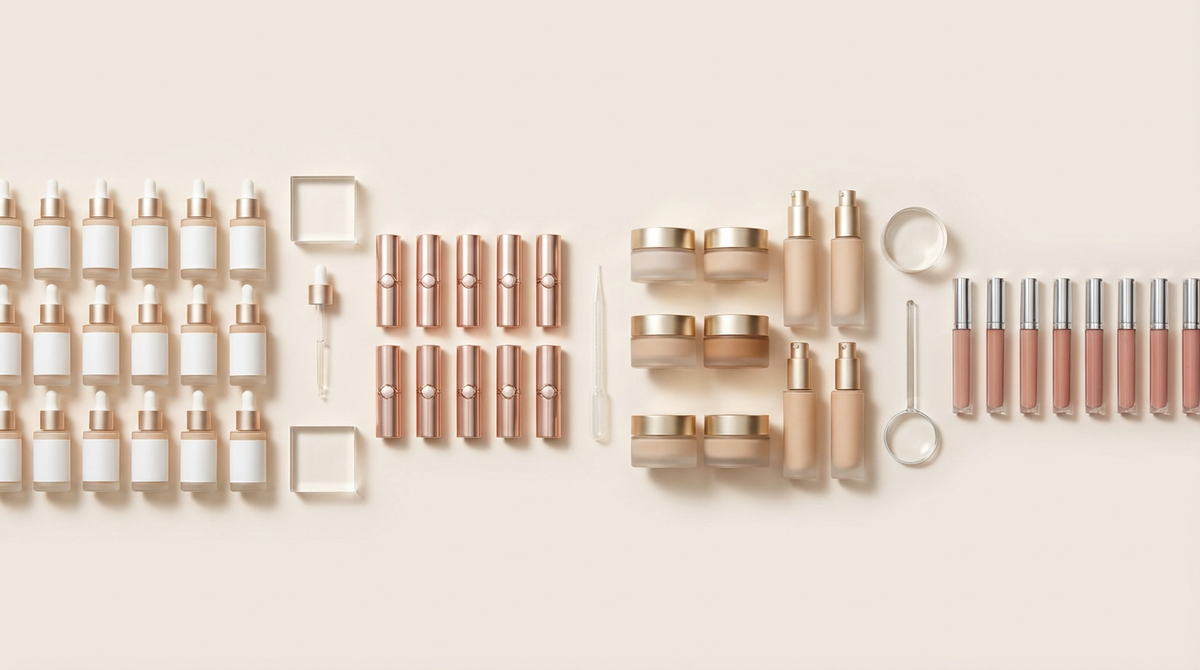
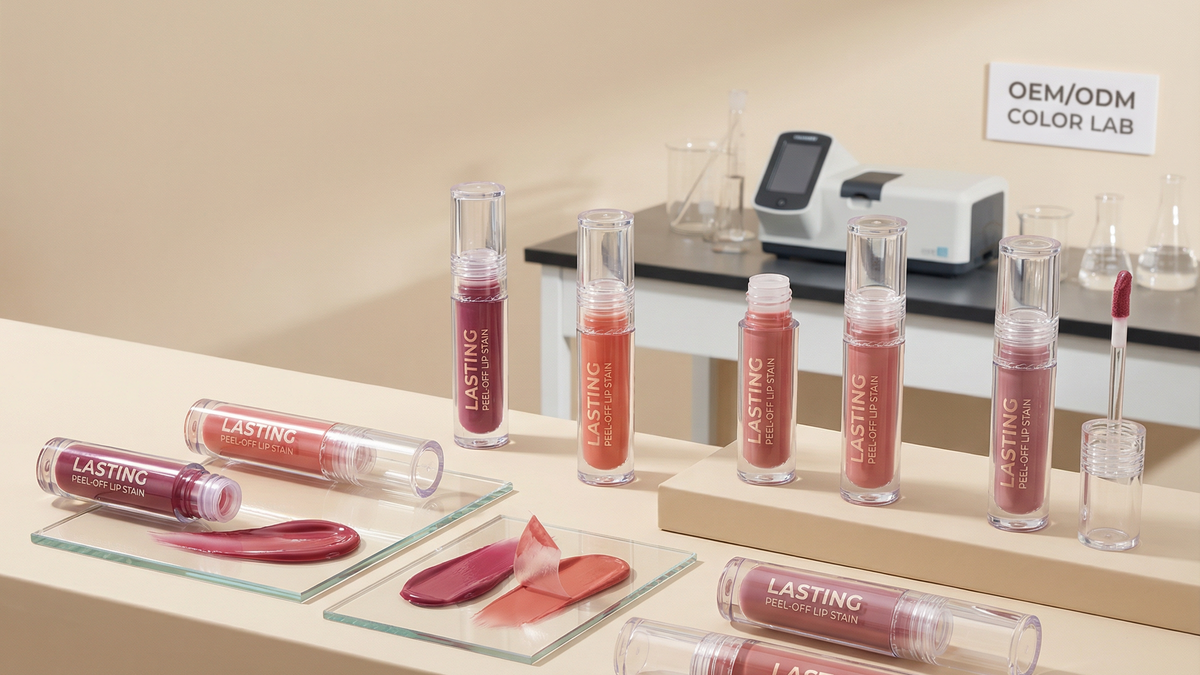
Every successful beauty product — whether it’s a peel‑off lip stain, hydrating serum, or high‑pigment eyeshadow — begins with a clear concept and an intentional development process. In today’s competitive beauty landscape, understanding how a product moves from an idea on paper to a finished product on shelves is essential for brand owners and distributors alike.
This guide walks you through every stage of beauty product development: from market research and formulation to quality control, packaging and launching. Whether you’re building your first product or expanding an existing line, these insights will help you make better decisions at each step.
1. Concept & Market Positioning
The first step isn’t about formulas or packaging — it’s about identifying a real opportunity. Strong product concepts are rooted in market understanding:
- Trend research: Analyze what consumers are searching for and what’s gaining traction in your target markets (e.g., long‑wear makeup sustainability, clean beauty).
- Consumer needs: Determine who your product serves — age, lifestyle, routines, skin concerns, etc.
- Competitive insight: Understand what competitors offer and where gaps exist.
A clear concept tells a story: “Who is this product for?” and “Why will they choose it?” That narrative should shape everything that comes next.
2. Lab Formulation & Ingredient Selection
Once the concept is defined, it’s time to translate it into a formula. This is where science meets creativity. Whether you choose an OEM partner with proprietary formulas or custom OEM development, this stage focuses on turning ideas into a viable product.
- Ingredient planning: Selecting actives, emollients, and supportive elements that align with your claims (e.g., hydrating, non‑comedogenic).
- Formula stability: Ensuring the product remains effective under different conditions (heat, light, humidity).
- Compatibility testing: Making sure the formula works with your chosen packaging and doesn’t react with materials.
Professional R&D teams create multiple prototypes that balance performance, safety and regulatory compliance. This reduces surprises later in scaling production.
3. Sampling & Refinement
Your manufacturer will produce small batches of samples for testing. This stage may involve several rounds of iteration:
- Feedback loops: You evaluate texture, scent, wear and performance.
- Adjustments: Chemists refine the formula based on your brand’s target experience.
- Market testing: Some brands use focus groups or influencer trials to gain early insights.
This structured refinement ensures the final formula aligns with your expectations and market requirements before large‑scale production begins.
4. Regulatory Approval & Safety Testing
Before products can be sold, they must meet regulatory requirements in the markets you serve:
- Cosmetic safety assessments: Safety testing to ensure products do not cause irritation or harm.
- Labeling compliance: Correct INCI names, allergen declarations, and mandatory warnings.
- Registration: In some regions like the EU, cosmetic products must be registered in systems such as CPNP.
Failing to meet regulatory standards can delay launches or lead to costly revisions, so it’s essential to work with manufacturers familiar with compliance documentation and testing procedures.
5. Packaging Design & Branding
Your product’s packaging does more than hold the formula — it’s part of the product experience and communicates your brand identity:
- Primary packaging: Tubes, bottles, jars that directly contact the product.
- Secondary packaging: Boxes, leaflets, and inserts that provide information and enhance shelf appeal.
- Brand consistency: Color schemes, logo placement, typography that fits your brand story.
Smart packaging strategies balance aesthetics, logistics, and cost efficiency — helping products stand out in both e‑commerce and retail environments.
6. Bulk Production & Quality Control
With approved samples and finalized packaging, your partner moves into full‑scale manufacturing. At this stage:
- Batch consistency: Each production run is monitored for uniform quality.
- Microbial testing: Ensures products are safe and free from contamination.
- Final QC checks: Verifies pH, viscosity, and formula stability.
Reliable OEM/ODM manufacturers implement strict quality protocols to maintain trust and compliance as you scale distribution.
7. Go‑to‑Market Launch
Once products are produced and packed, they’re ready to reach customers. A successful launch includes:
- Sales channel strategy: E‑commerce, retail distributors, or both
- Marketing campaigns: Social, influencer collaboration, PR
- Inventory planning: Aligning stock levels with launch promotions and seasonality
Integrating product development with your launch plan ensures a smoother transition from production to sales performance.
Frequently Asked Questions
How long does product development usually take?
The complete process — from initial concept to market launch — can range from 8 to 24+ weeks depending on complexity and testing requirements.
Can brands modify formulas after launch?
Yes — formulas can be updated based on customer feedback or emerging trends, but this typically involves new stability and compliance testing cycles.
Do I need a manufacturer that handles packaging and design?
While not mandatory, manufacturers that offer packaging support and pre‑press artwork services greatly simplify the workflow and reduce coordination errors.
Final Thoughts
Turning a beauty idea into a market‑ready product is a complex but rewarding process — one that blends creativity, science, and strategic execution. By understanding each stage of product development and partnering with experienced OEM/ODM manufacturers, brands can reduce risk, improve quality, and bring coveted beauty products to consumers with confidence.
Great products are built through structured development — not guesswork.