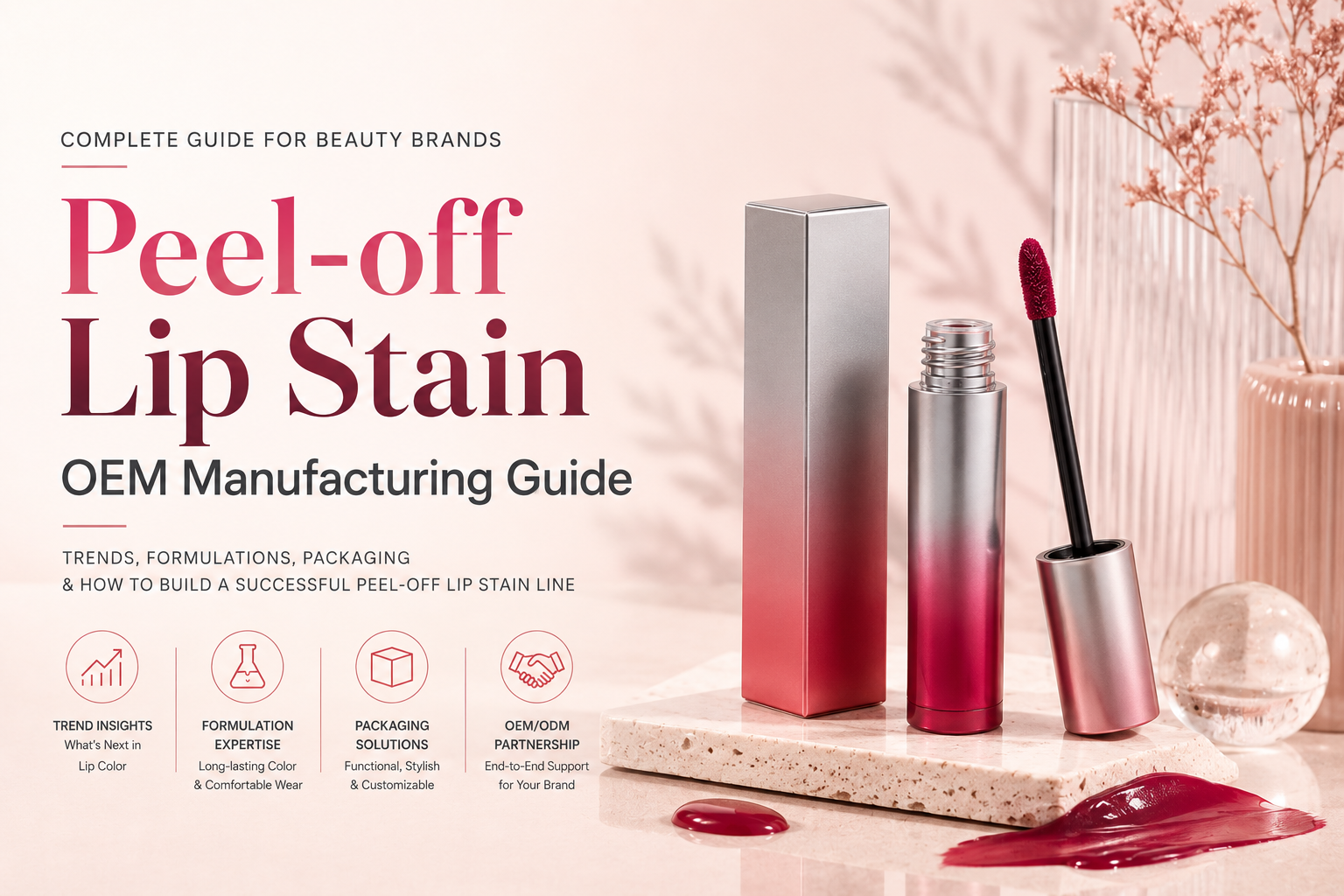
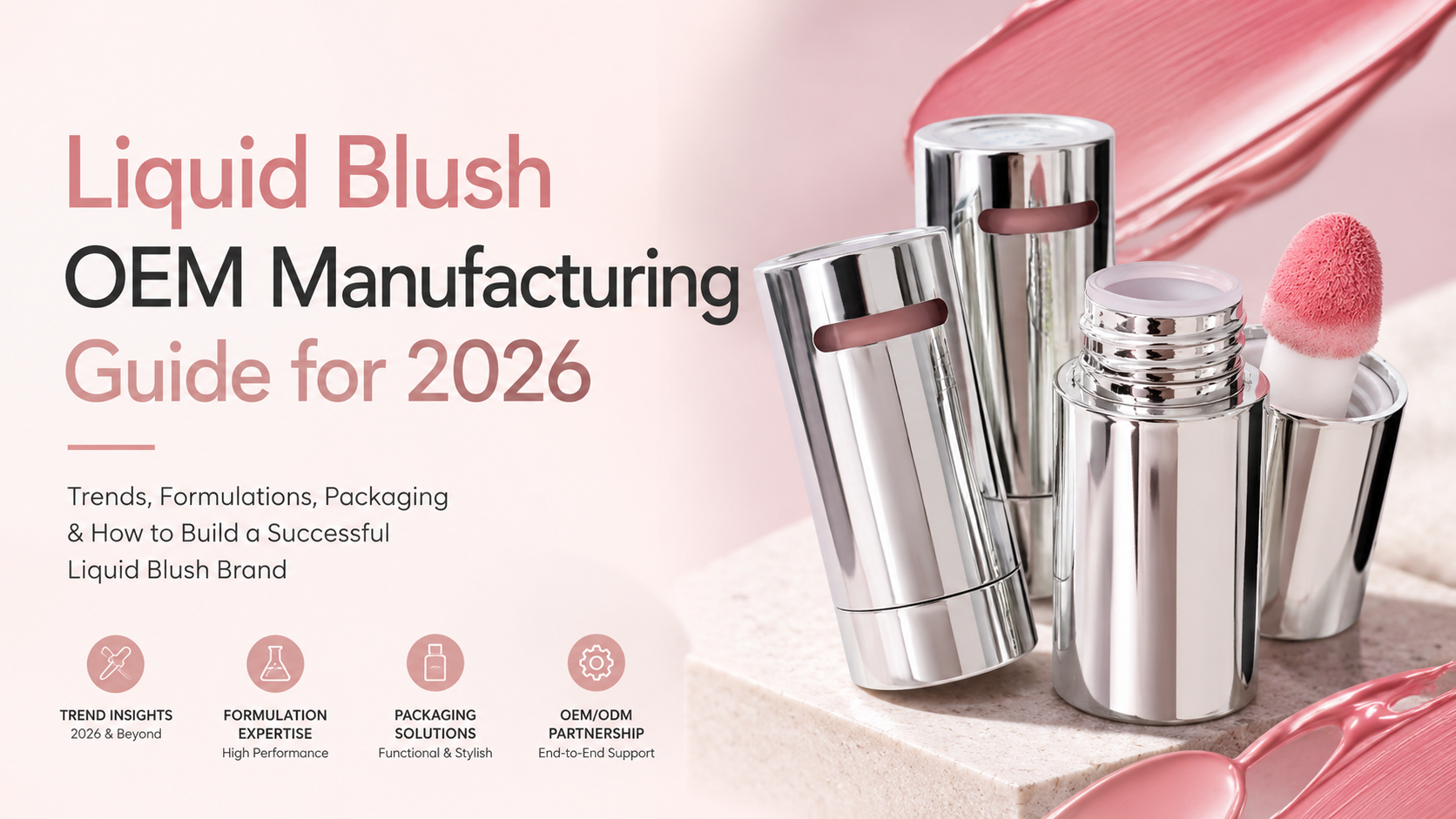
When a lip product can read as makeup, comfort care, and an affordable premium item at the same time, I pay attention. Tinted lip oil fits that space: Vogue named glassy pouts and lip stain 2.0 among the key 2026 lip directions, while Cosmopolitan forecast tinted lip oils as a leading makeup product for 2026 (Source: ; Source: ).
I work with ZM Beauty, and I see lip oil as one of the most commercially useful lip categories for B2B buyers because it can bridge mass retail, creator-led DTC, gift sets, and seasonal shade drops.
Market data behind the lip oil opportunity
The global color cosmetics market reached USD 100.2 billion in 2025 and is estimated at USD 105.2 billion in 2026 (Source: ). Grand View Research projects USD 148.7 billion by 2033 at a 5.1% CAGR, with lip color cosmetics expected to grow faster at a 6.2% CAGR from 2026 to 2033 (Source: ).
Hybrid color products are a key growth signal. Grand View Research says products such as tinted sunscreens and lip oils are gaining traction because they combine hydration, coverage, and color in a single step (Source: ). The same report states that face color cosmetics held 38.2% share in 2025, mass/economy color cosmetics held 55.1%, and online/e-commerce color cosmetics are expected to grow at a 6.7% CAGR from 2026 to 2033 (Source: ).
Lip-specific spending also supports the case. Circana data reported by The Times found the UK prestige lip market grew 16% year over year to GBP 80.4 million in the first half of 2025, with hydrating balms and oils up 21% (Source: ). For me, that 21% number matters because it points directly at comfort-led lip products rather than only pigment-led products.
What separates good lip oil from ordinary gloss
Lip oil is not just thin gloss with a new label. A good tinted lip oil needs controlled slip, cushion, pigment clarity, non-gritty shimmer if shimmer is used, and a finish that looks glossy without heavy tack. The user should feel comfort immediately, but the product still needs enough body to stay on the lips.
The formula brief usually starts with three choices: clear oil with tint, milky oil with soft color, or gloss-oil hybrid with higher shine. The first is easiest for natural everyday looks. The second feels more K-beauty inspired. The third is better for retail buyers who want shelf impact.
ZM's official lists multiple private label OEM/ODM lip oil options, including R10-1, R10-2, R10-4, G161, G158, G107, Z001, Z002, G143, G135, G85, and G112-2 (Source: ). The R10-1 product page lists 39 Glossy Lip Gloss color variants, a sample price of USD 12.99, customizable formulation, customizable tube and color, and packaging design customization (Source: ).
Trend drivers behind tinted lip oil
-
Comfort is replacing the old sticky gloss memory. Vogue's 2026 lip report says newer glassy formulas are leaning skin-care-forward and less suffocating than traditional petroleum-heavy glosses (Source: ). For buyers, this means texture testing is a sales issue.
-
Lip care language is influencing makeup. Who What Wear UK reported that 2026 lip care is moving beyond basic balm toward more advanced benefits such as peptides, SPF, hydration, and barrier support (Source: ). Even when we manufacture color cosmetics, buyers use that language to frame lip oil value.
-
Affordable premium products remain resilient. The UK prestige lip market's 16% growth in early 2025 shows that small beauty purchases can hold up even when consumers become selective (Source: ).
-
Digital discovery favors visual texture. Grand View Research cites 53% of consumers making purchases through social platforms and 49% already receiving product recommendations through generative AI (Source: ). Lip oil is highly swatchable, so shade and shine must photograph well.
How I position ZM Beauty for lip oil manufacturing
I work with ZM Beauty, the brand of Guangzhou Zemei Cosmetics Co., Ltd., founded in Guangzhou in 2017. Our manufacturing focus is color cosmetics, including lip, eye, face, and brow products, with OEM/ODM private label and custom formulation services. We have an in-house lab, experienced chemists, GMP, FDA registered, ISO 22716, and Halal certifications, and export reach across 30+ countries.
For a lip oil buyer, I usually connect the project with the , , , , and . That helps us build bundles and shade systems instead of one tube.
Our standard MOQ is 200 pcs per SKU and typical lead time is 25 to 35 days, with custom formulas varying by testing scope. We are better suited to buyers who can plan commercial quantities and packaging decisions early.
Five sourcing questions to ask
-
Is the texture oil, gloss, or gloss-oil hybrid? Each choice affects cushion, shine, wear, and filling behavior. I ask this first because buyers often use "lip oil" for very different textures.
-
How many shades can be controlled across production? The R10-1 page lists 39 color variants, but a launch should not use every option. I prefer a tight shade edit with clear warm, cool, and neutral logic.
-
What packaging keeps the product clean? Lip oil can leak if wiper, cap, and viscosity are mismatched. Packaging testing matters before a buyer approves bulk.
-
Which claims are allowed? Hydrating, nourishing, vegan, Halal, long-lasting, and non-sticky claims need evidence. I avoid claim language that sounds good but cannot survive compliance review.
-
How will the product be merchandised? Lip oil can be sold alone, in duos, or as part of a lip routine. This affects shade count, unit carton design, and reorder planning.
Risks and downsides
The first risk is overloading the formula with oils that feel rich but shorten wear. The second is weak pigment payoff that disappears on deeper lip tones. The third is leakage during hot-weather shipping. The fourth is making skincare-style claims that the formula has not been built or tested to support.
There is also category crowding. Cosmopolitan's 2026 list shows many retail lip oil options across premium and mass price points (Source: ). I tell buyers that the answer is not louder packaging alone. It is better shade logic, better feel, and a clearer reason to reorder.
Category advantages
-
It fits the hybrid makeup trend. Grand View Research specifically names lip oils as part of the hybrid product movement (Source: ).
-
It works across seasons. Summer supports shine and sheer color; winter supports comfort and lip care positioning.
-
It can support high shade repeat. The R10-1 product page lists 39 color variants, giving buyers room for a core edit and seasonal extensions (Source: ).
-
It pairs well with other lip SKUs. Lip oil can sit beside stain, liner, gloss, and plumper without confusing the consumer.
How I would brief a first lip oil launch
I would begin with finish architecture. A buyer can choose clear glass shine, soft milky tint, shimmer oil, jelly tint, or a thicker gloss-oil feel. Each finish changes pigment loading, viscosity, and how the product reads on camera. For a first launch, I usually prefer one clear or nearly clear comfort shade, two wearable nudes, one rose, one berry, and one warmer brown or coral. That gives enough range without turning MOQ into slow-moving stock.
The second decision is scent and taste. Lip oil sits close to the mouth, so a scent that feels attractive in a bottle can become tiring after repeated use. I ask buyers to test samples over several days, not only during a quick office swatch. If the product is meant for teen retail, scent can drive trial. If it is meant for a cleaner premium brand, a softer scent or unscented direction may fit better.
Packaging is the third major decision. A large doe-foot applicator can create a plush experience, but it must work with the wiper. If too much product comes out, the lip oil feels messy and margins suffer because users over-apply. If too little comes out, the product feels cheap even when the formula is good. I would request filled-pack testing before approving bulk.
Finally, I would connect the lip oil to a routine. A brand can sell it as a gloss replacement, a topper over lip stain, a nightstand comfort product, or a travel-friendly shine product. The position affects naming, carton copy, shade photography, and bundle strategy. A strong product brief makes sampling faster because the lab is not guessing what the buyer means by "premium lip oil."
FAQ
Is tinted lip oil a skincare product?
No. In our manufacturing context, tinted lip oil is a color cosmetic with comfort and shine benefits. I avoid positioning it as skincare unless claims and testing support that route.
What MOQ applies at ZM Beauty?
Our standard MOQ is 200 pcs per SKU. Orders below 200 pcs are not a fit for ZM Beauty's manufacturing model.
Can buyers customize shades and tubes?
Yes. The R10-1 page lists customizable formulation, tube and color customization, and packaging design customization (Source: ).
What should buyers test in samples?
I test shine, tack, pigment clarity, leakage, wiper performance, scent, after-feel, and stability under heat.
How many lip oil shades should a first launch include?
I usually prefer four to six shades: clear or barely tinted, nude, rose, berry, brown, and one seasonal shade if the brand has a strong color point of view.
Can lip oil be bundled with lip stain?
Yes. A stain plus oil routine is practical because stain gives color hold while oil gives shine and comfort.